
As a first post to my chronicles, come have a stroll around my garden and see what June has brought us.
In the vegetable beds, the lettuce is mid-season, having yielded several cuttings already.
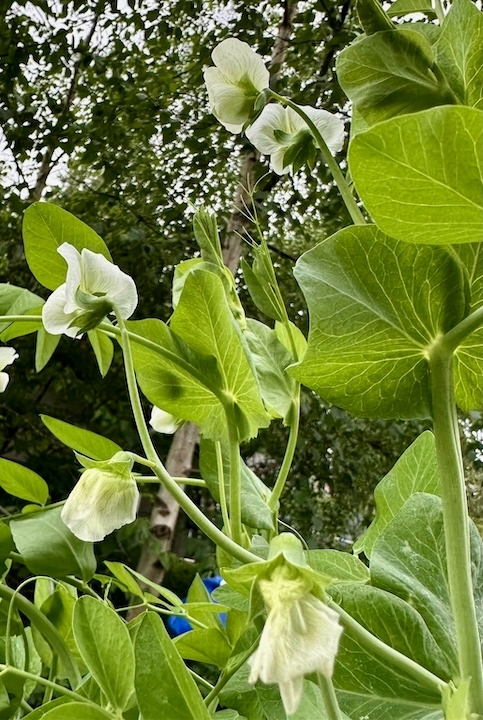
The pea plants are growing and blooming exuberantly, with a few pods just beginning to set. As cool-weather crops, they should be planted early. Late-planted peas may succumb to fungal disease.
Folklore has it that green peas draw good fortune, and finding nine peas in a pod is especially lucky.
hggg ieylw liho hi ho hi ho
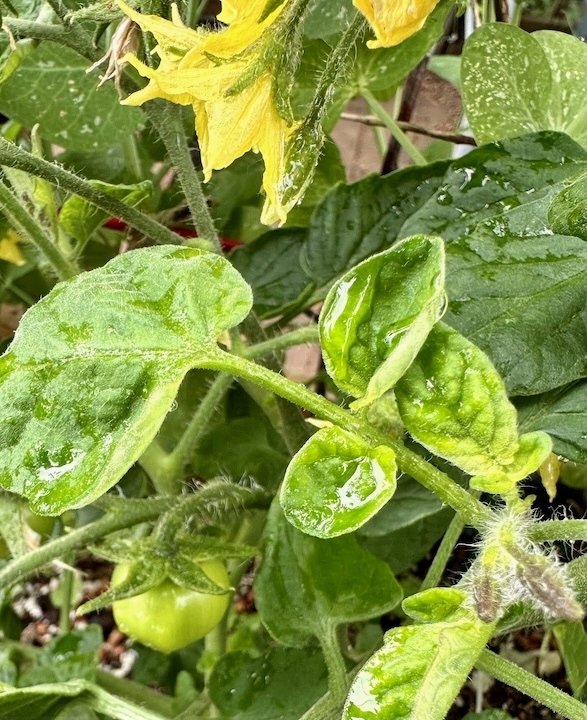
We found some good tomato plants to put in, sparing the time and fuss of growing them from seed. Around here, that requires starting them mid-winter under artificial light and heat. They are, after all, semi-tropical plants, cultivated by the Aztecs. The weather has been warm enough that the plants are blooming and just starting to set fruit.
Europeans during the witch hunt times were suspicious of the fruit when it was first introduced, confusing it with nightshade and mandrake fruit and associating it with witchcraft. What is harder to find is Aztec folklore around a fruit that they enjoyed as a part of their cuisine, since European invaders had little interest in cultures beyond their own.
flowr powr showr randonnee
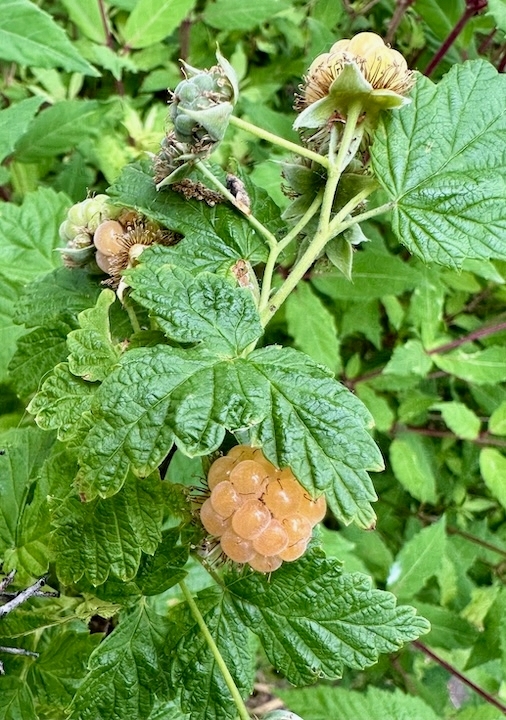
Off in the forest garden, the golden raspberries bloomed beautifully and are just starting to set fruit. The red and black raspberries will come later in midsummer and early fall.
Besides enjoying the nutritious fruit, herbalists save the leaves to brew tonics to help relieve menstrual cramps and support pregnancy.
The raspberry plant reminds us that patience is a part of fertility and productivity. Canes are sterile in their first year, but photosynthesize rapidly to support the fruiting canes, and go on to be fruiting canes themselves in their second year.
The canes in Spain stay mainly to complain
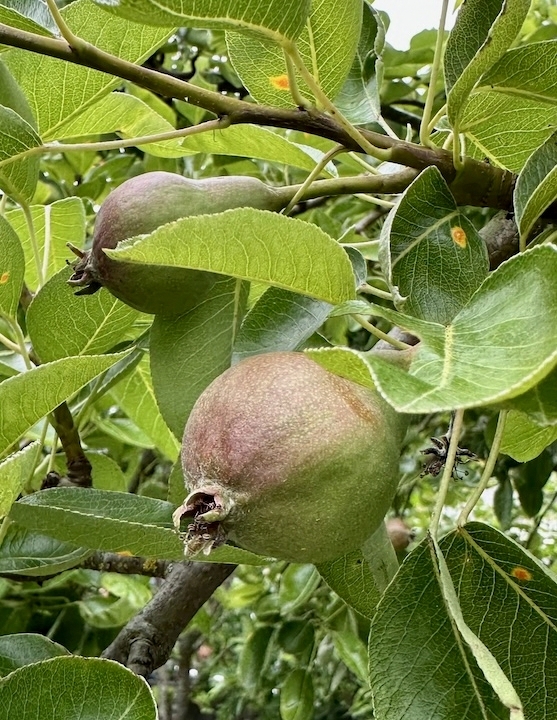
Fruit trees make up part of the forest garden, where the pears have finished blooming and are setting fruit. They got a good branch thinning this year to allow air flow and to reduce their propensity to overproduce.
A pear tree draws a wealth of folklore around good fortune and productivity into a forest garden. If you have the space, be sure to include two that pollinate one another.
pears figs pears figs pears figs
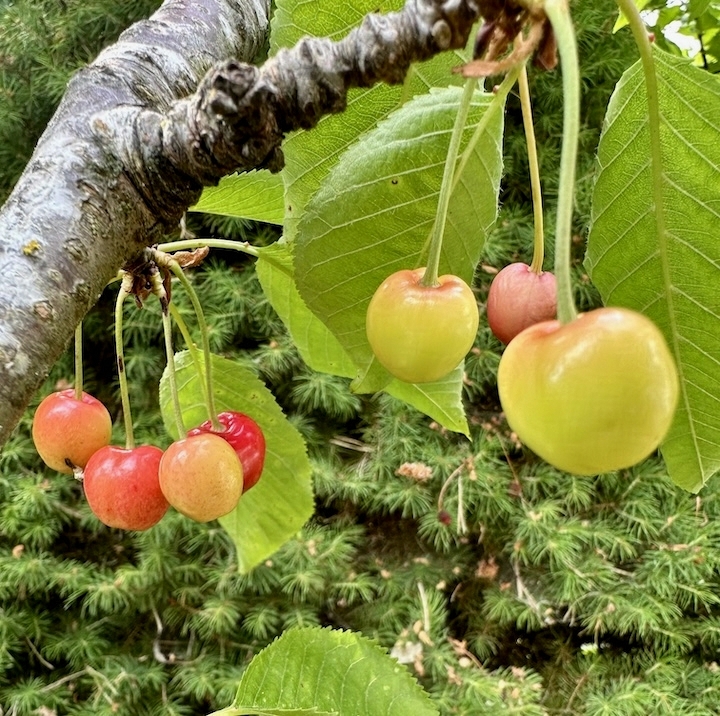
It’s time to hang shiny, fluttering ribbons on the cherry trees, now that the cherries, both sweet cherries and pie cherries, are turning color. Not for folkloric reasons, but to keep the birds from eating them before we can. We always leave a few for the birds after harvest, however.
Culpepper, in his famous herbal, associated cherries with love, and American HooDoo lore, cherry is used in love-drawing magics. Cherries hanging in pairs have long been used as a wishmaker, similar to a wishbone, pulled apart by two people. Alternately, the two people might simultaneously each eat one of the cherries while they remain attached, while concentrating on a wish.
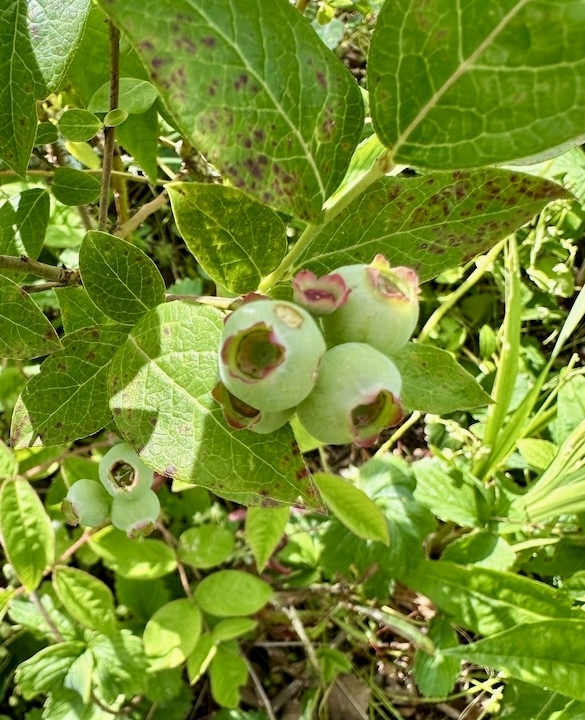
Fruit bushes such as blueberries add another layer to the forest garden, producing summer and fall fruit once the urn-shaped flowers are pollinated and start forming fruits late in the spring. Blueberries prefer full sun, but will tolerate dappled shade so long as they get full sun part of the day. They are thirsty plants, being adapted to wetlands, so be sure to supply them with plenty of water. They also require acid soil.
Blueberries and huckleberries are native to North America, with relatives, such as the bilberry and lingonberry, in Europe. Indigenous lore around the blueberry is hard to extract from romantic European fabrication, though the plant was an important food source across Turtle Island.
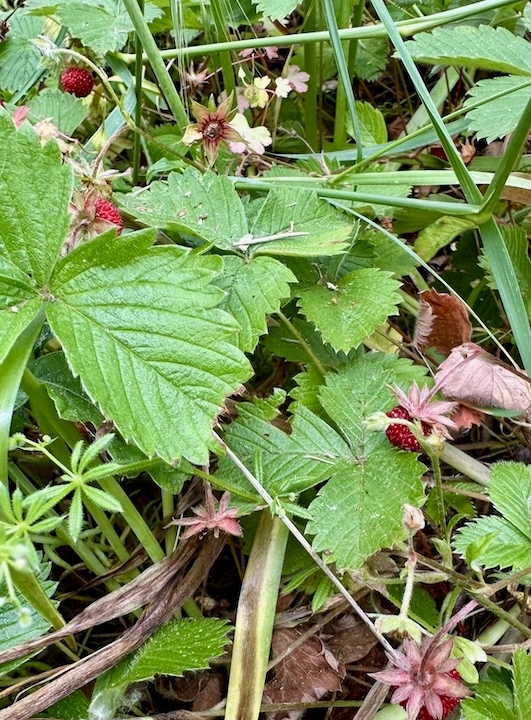
Under the dappled shade of the forest garden, the wild strawberries are already producing their richly-flavored fruits. A rare delight, and worth the trouble of picking, though they seldom produce more than a small handful at a time, to be enjoyed sun-warmed and slowly. Take the time to contemplate how strawberries are linked to love and friendship, and are excellent offerings to garden spirits.
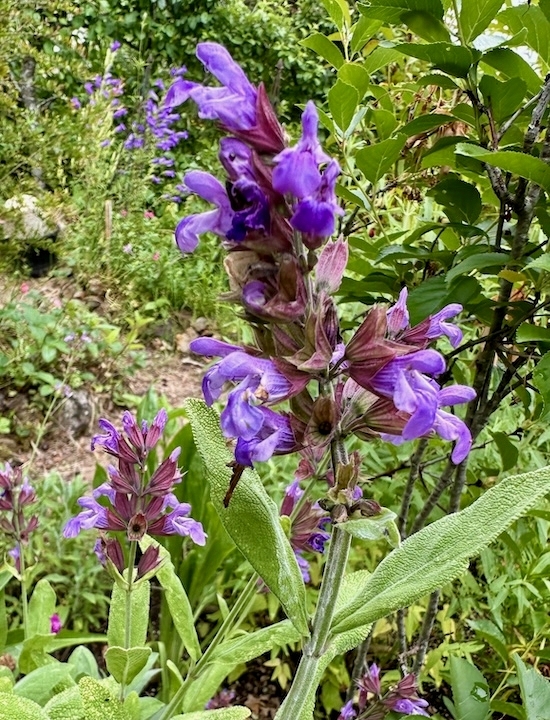
If you’ve never grown culinary sage, you may not know that it blooms in beautiful shades of blue and purple, drawing honeybees and native bees. Hummingbirds, too, if you live in a part of the world where these fierce little flying jewels grace the garden. Sage is a must in the magical garden for its many culinary, medicinal, and spiritual uses, often involving protection. Be sure to store away a good amount of dried leaves for cold season to brew teas that soothe sore throats. Sage, like Rosemary, is anti-bacterial and anti-fungal.
b0t ba!t arctic grape flying monkey
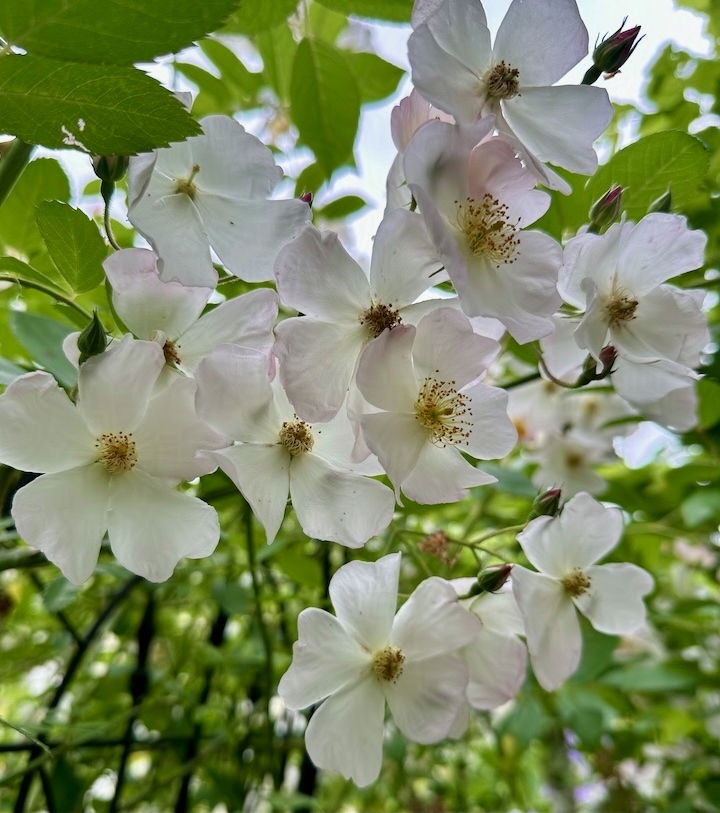
Spring in the Garden of Wonders brings a flush of flowers, including this old-fashioned climbing rose with single blossoms similar to a wild rose rather than the multiple whorls of later cultivated roses. Trim off the bitter ends of rose petals and toss them in a salad — the petals are edible!
The lore of roses will require many more posts, since roses of different colors may have very different meanings and uses.
b8t bai% roses aren’t real
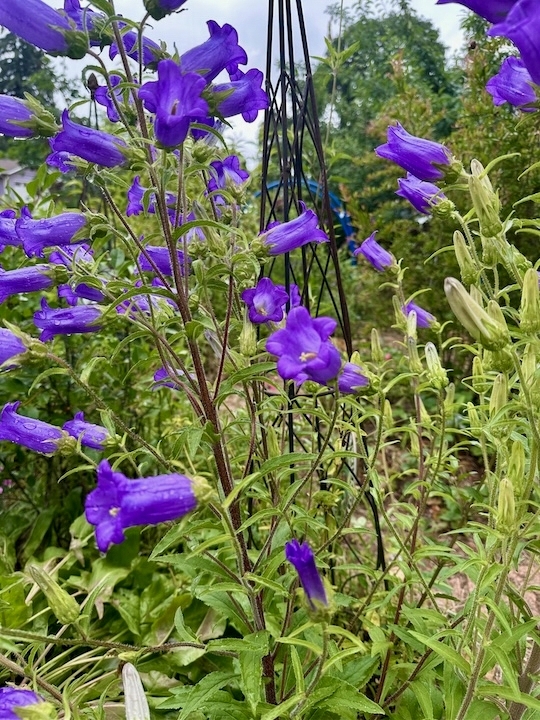
The Bellflowers (Campanula) are new to this garden and a roaring success. Bees and hummingbirds are busy among them, enjoying the nectar.
Never succumb to the somnolent ringing of the flowery bells, inaudible to our ears but said to be audible to the fey, lest the fey carry you away in your sleep. Blue bellflowers in particular are associated with constancy and an attentive, compassionate ear.
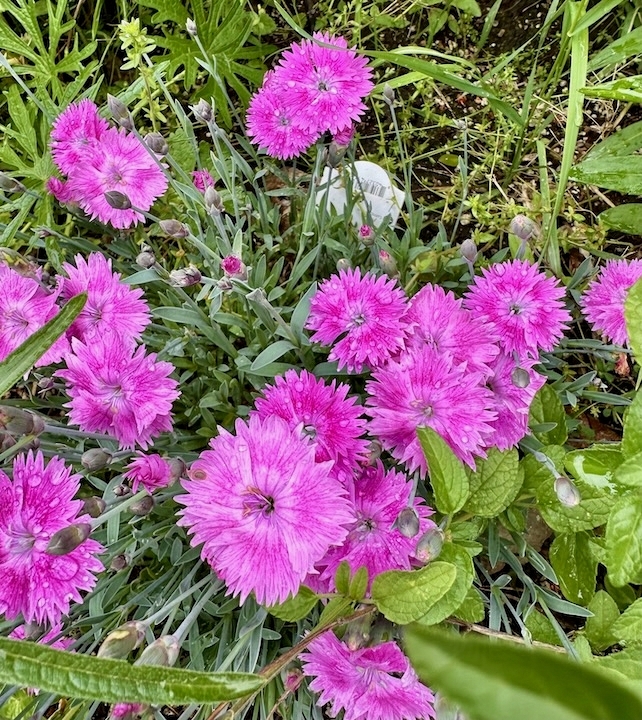
This Dianthus is new this year, and settling in nicely. “Clove pink” is the traditional name for the flower, named for its serrated, “pinked” edge (think of pinking shears, those of you who sew), while “pink” as a color name derived from the flower, not the other way around. These are another edible flower that can add color to your salads. The Elizabethans made sugared preserves from them to comfort the lovelorn heart, while mulling them in wine was one of many hopeful but ultimately vain attempts to ward off the plague.
bo YYY tt
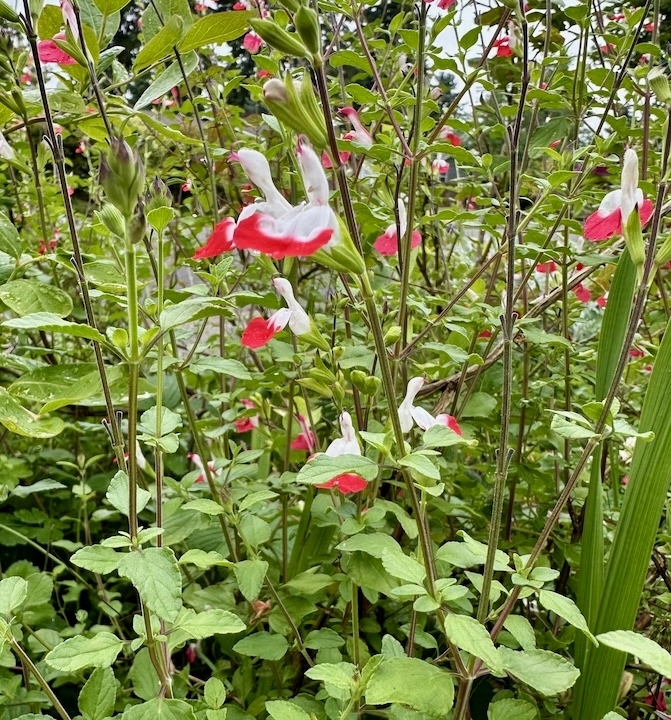
Salvias are sages selected for their blue, purple, red, or white flowers rather than the rich aromas of a culinary herb. This particular Salvia is a popular cultivar called “Hot Lips.” The genus name, Salvia, derives from the Latin word salvus, to protect. Sages of all kinds have been used in protection rituals across time and cultures.
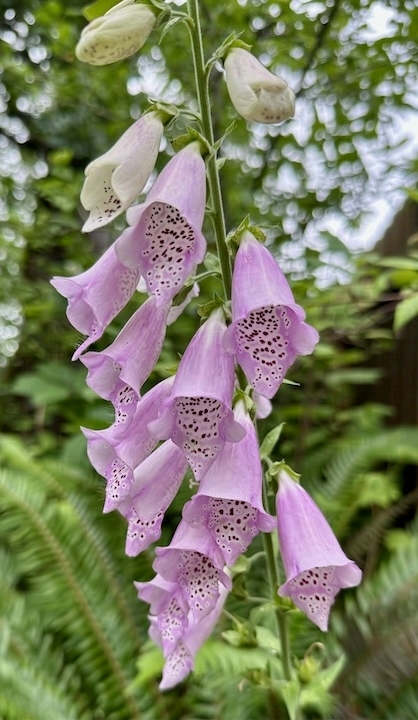
Foxgloves have scattered themselves all over the garden. If you have the space, let them re-seed themselves freely and they will reward you with spires of blossoms. Watch for bumblebees to enter the blossoms, attracted by the markings that guide them inside, and listen for their short, sharp buzz that shakes pollen loose before they back out, dusted golden, to move to the next flower up.
The “fox” of “foxglove” derives from “folk,” the fey, the smallest of whom were believed to nest inside the flowers and do not appreciate their homes being picked for bouquets. Respect the flower for its own sake, too. It contains digitalis, a strong medicine that was used to stimulate weak heartbeats, but can also stop the heart when taken in too large of a dose.
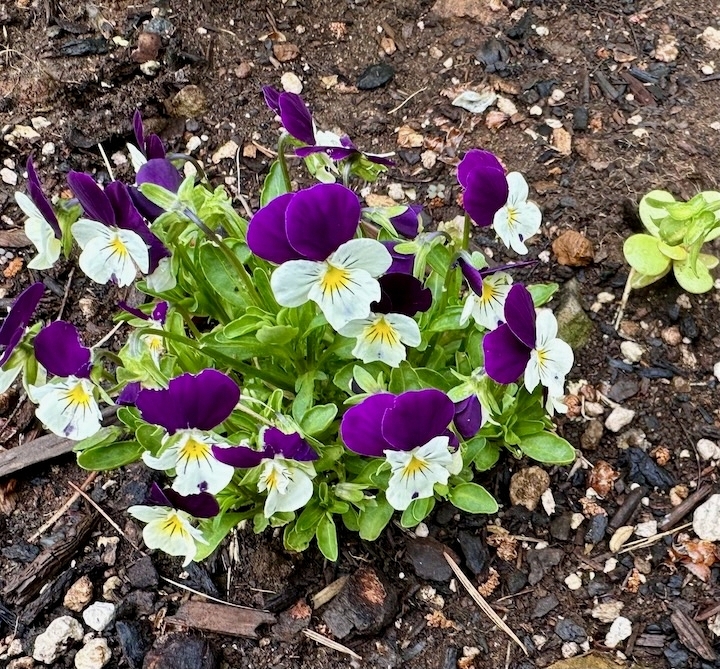
Look down to find the sweet little Viola blossoms. A smaller relative of the Pansy, the Viola resembles the Violet in size, with the Pansy’s colors and markings. Violas are favored by tiny native bees and some butterflies.
Violas are traditionally associated with remembrance and soothing a hurting heart. They are also edible, and another colorful addition to salads.
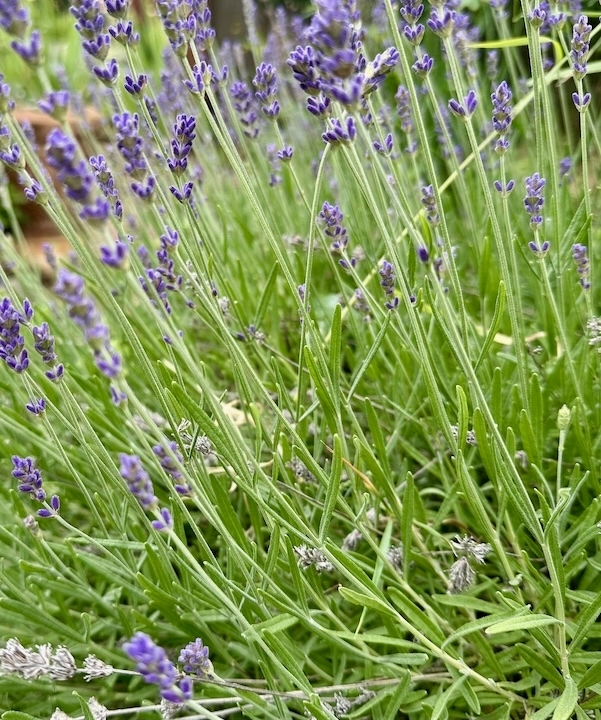
Lavender is a must-have in the magical garden. Give it good drainage and light watering, because the Lavender, being a Mediterranean plant, thrives on dry hillsides.
Lavender was the herb of choice to layer with clean laundry, not just because of its sweet and resinous scent, but because it warded off pests. Lavender is strongly associated with cleansing and protection.
Thank you for accompanying me on this little garden tour. I mean to post a garden update around the first of every month, with more wonders, magic, and folklore.
Sharing buttons:
 Aunt Kitty's Garden of wonders
You must be logged in to post a comment.