
Fortunately for those who prize lemon balm for its use in cooking and herbal remedies, the herb is absurdly easy to grow. Almost too easy, in fact. Like all the herbs in the mint family, lemon balm can be aggressively invasive. If you know someone who has lemon balm roaming in their garden, chances are they’ll be glad to give you one of many small plants they’ve dug up. It can also be grown from a cutting. It grows well in large pots with loamy, moist soil, and may grow happily indoors by a south-facing window.
Lemon balm tea has long been believed to confer longevity on those who drink it often. Herbalists of the past prescribed it for melancholy. Lemon balm is also an important ingredient in Carmelite Water, once thought a panacea for the worst diseases of the Middle Ages, including plague, now enjoyed as an herby, spicy alcoholic drink. While the original recipe is a closely guarded secret, you can find a fair replica on the Monterey Bay Herb Co. page: The Story of Carmelite Water.
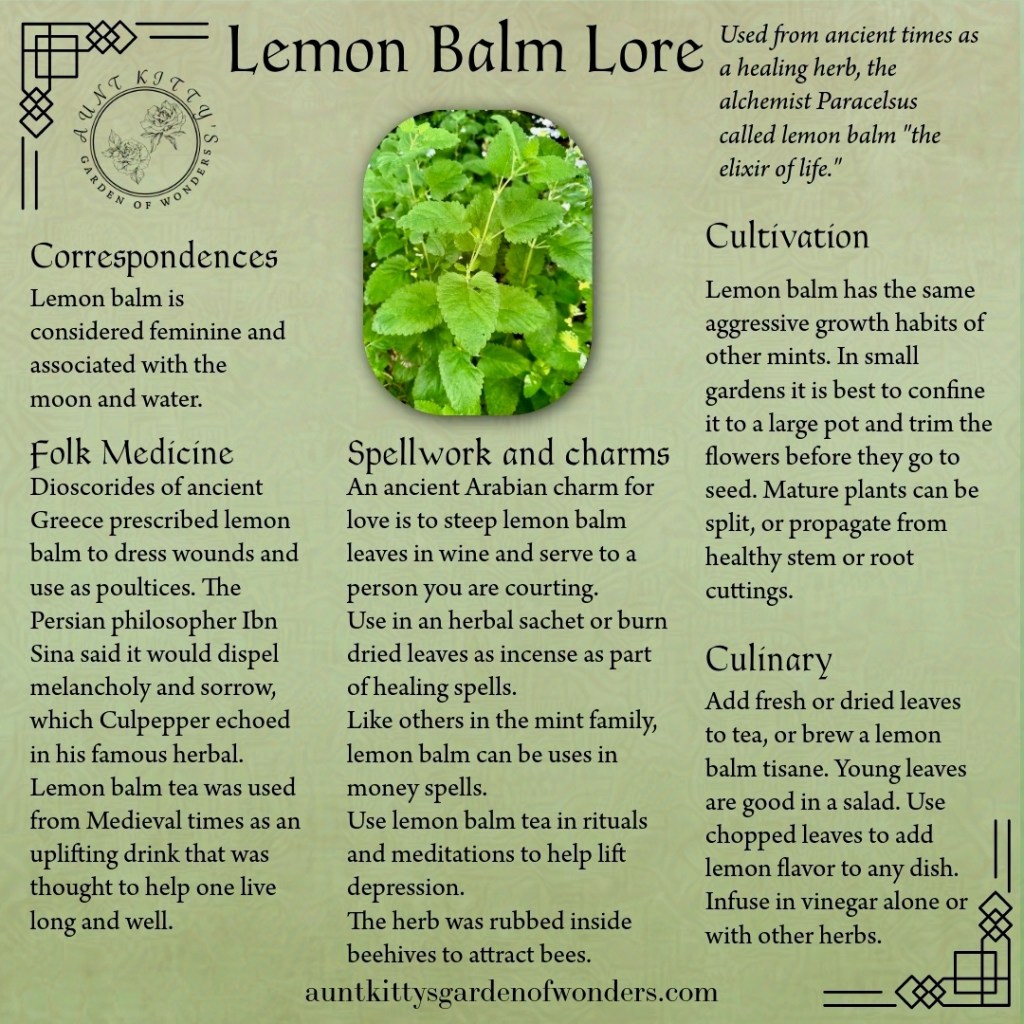
Here is a shareable infographic about Lemon Balm.
 Aunt Kitty's Garden of wonders
You must be logged in to post a comment.