
Oh, no. We woke up with a cold.
Earlier in the week, we went to meet an elderly relative who was taken to the emergency department after a fall. The lovely people there found no fractures or injuries after three separate trips to imaging, thank the universe, but the whole department was so busy that we were there for hours. Of course, there were sick people present, including children and even adults who coughed with their mouths wide open and not bothering to use a mask.
There were masks available. We thought about putting one on. And then we thought those oft-fatal words: “Oh, it’ll be all right.”
We are not all right.
Colds, as you may know, are caused by rhinoviruses. There are hundreds of strains of the cold virus, which is why one never becomes immune to colds in general, only the strains your body has actually fought off. Since viruses are involved, antibiotics will not cure a cold. Antibiotics kill bacteria by disrupting different life processes, depending on the antibiotic. Viruses, not being alive, do not have these processes. Antibacterial agents such as alcohol or bleach, will destroy both viruses and bacteria, but will also destroy our cells, which is why bleach is not taken internally.
Hence there are no medicines to cure a cold, and that includes herbal or nutritional approaches. Even antiviral medicines work on the immune system, not the viruses themselves. The best we can do is rest and use comforts and remedies that reduce symptoms and help prevent a secondary bacterial infection.
Probably the most effective front-line defense comes from the pharmacy rather than the herb garden: antihistamines. The cold virus stimulates histamine production in nasal cells, which is what causes that pesky runny nose and nasal inflammation. Antihistamines, taken during the first few days of the cold, can reduce the histamine load and help reduce symptoms. Decongestants containing pseudoephedrine can keep sinuses open and draining, helping reduce the risk of a sinus infection.
But there are plenty of remedies from the garden and the pantry shelves that can help as well.
Steam helps relieve congestion, as contrary as it may seem that something so damp would help open up soggy nasal tissues. Steam from a cup of tea, from hot water running in a sink, from a vaporizer, or in a hot shower or bath will bring temporary relief. Eucalyptus or menthol in the steaming water can also bring temporary relief. Steam also helps soothe persistent dry coughs, and helps thin the mucus of wet coughs so it can be coughed out more easily.
Fruits and vegetables supply antioxidants, to help clean up the mess left by immune cells using oxidizing chemicals on microbial invaders. Moderate amounts of zinc have been shown in some studies to reduce the duration of a cold, though overuse of zinc can actually put a damper on the immune system. Vitamin C from food or supplements won’t cure a cold, but absorption increases during illness, so it must be doing something. Echinacea isn’t the panacea it was once thought to be, but Black Elderberry appears to stimulate immune cells to produce a little more of their cytokines, the chemical communicators between immune cells, during acute viral illnesses. However, elderberries must be cooked before consuming. Several herbs have antibacterial (not antibiotic) effects and can help treat secondary bacterial infections on the surface of the upper respiratory tract until antibiotics can be obtained. Over the decades that we have taught college-level science, our students have tested the effects of various herbs on bacteria in Petri dishes, and confirmed many times over that Rosemary, Sage, and Garlic all have mild antibacterial properties.
Salt helps reduce inflammation and congestion by osmosis. In simple terms, the strong salt solution causes water to leave swollen and boggy nasal and throat tissues. Nasal salt rinses can reduce nasal congestion but — and this is very important — always use distilled or boiled water. Even the best municipal water treatment systems can let a few stray bacteria through, which you do not want lodged high in your sinuses.
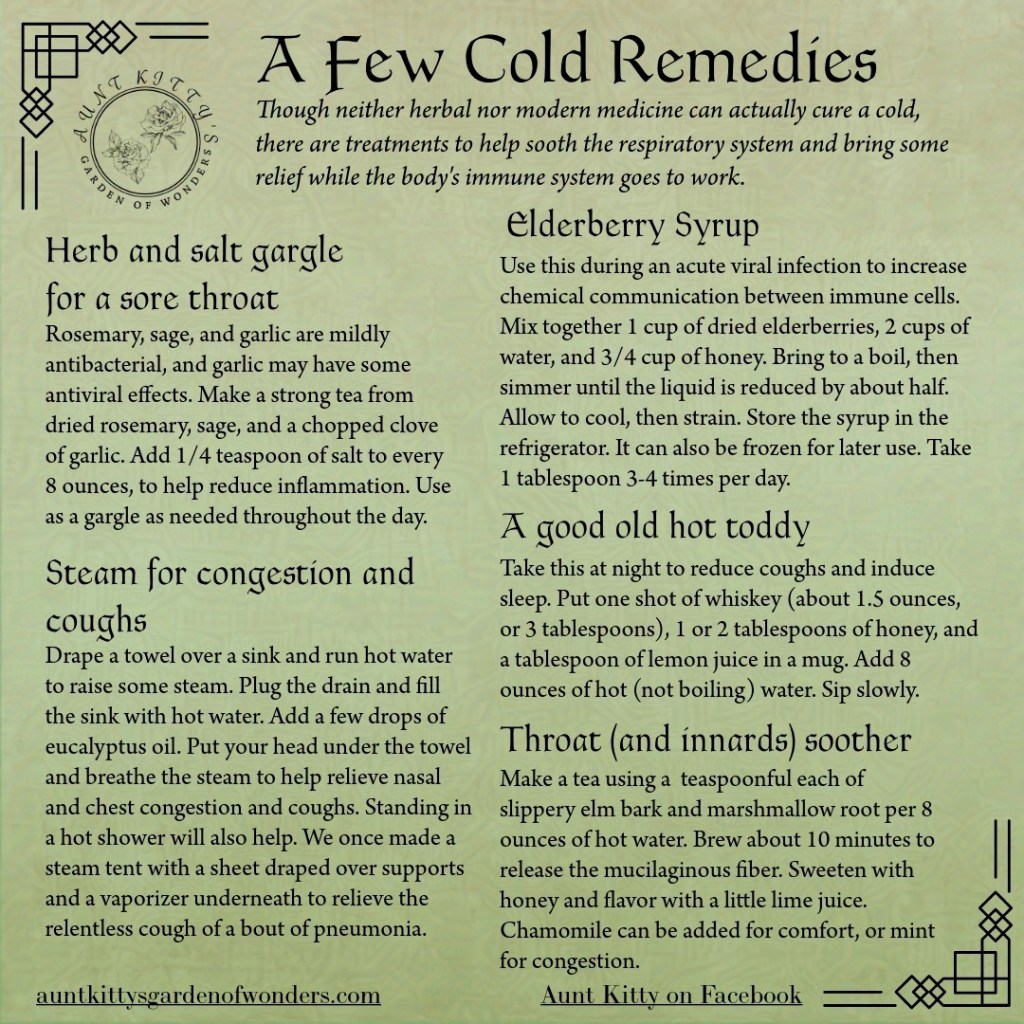
While there are many home remedies handed down in families, described in books, and repeated all over the internet, here are just a few, made with common ingredients, that we and people we know have used and found effective.


You must be logged in to post a comment.