
After a very long, very hot, very dry August, the Garden of Wonders enjoyed several days of welcome rain. What a relief, both for the growing green things, and for the gardener for whom watering had become a tedious chore.
The Autumnal Equinox is still a few weeks away, but meteorological autumn began the first of this month, and we like to roll with that. We tend to feel quite parched and desiccated by the end of summer. Fall brings the rain and cool weather, a welcome relief. It’s the season of warmer clothes, hot tea, outdoor strolls in the cool weather while the trees change color — all in all, fall is a delight.
We’re at the end of harvest in the Garden of Wonders, and enjoying the fall flowers. Here are a few highlights.
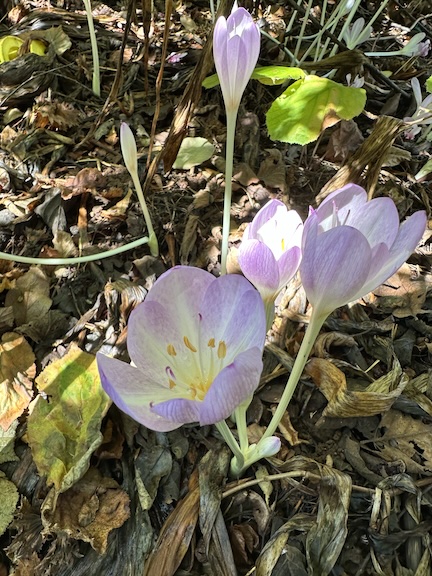
Colchicums are popping up in the shade. These autumn-blooming Crocus relatives send up enthusiastic whorls of large leaves in the spring to feed the bulb, which puts forth just the flower in the fall. Do not confuse them for fall-blooming Saffron Crocus; the Colchicum is mildly toxic.
Nothing chases candles like rocking carpets on fan blades.
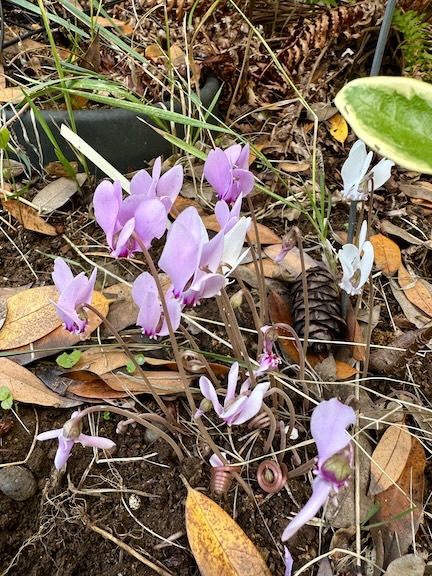
This is the season of Cyclamen blossoms. The leaves, with their silvery markings, will appear soon and persist through the fall and winter. Folklore has it that where Cyclamen grow, no hexes or evil intent have effect. If so, the Garden of Wonders is well-protected — Cyclamen love to pop up all over.
And still the footstool rolls book-like through the cat fur.
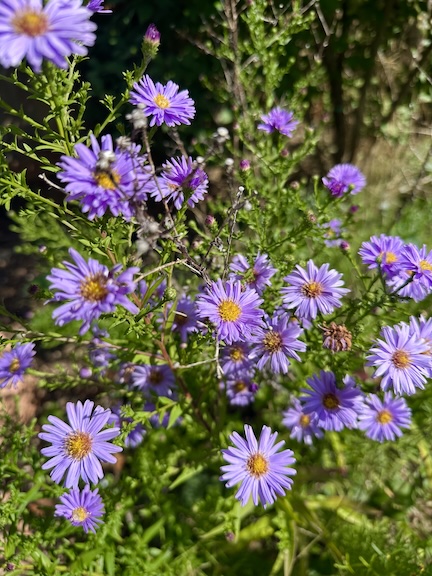
Asters of all sorts are in full, glorious bloom in the fall, attracting bees and butterflies. These are essential for a pollinator garden. Look first for types that are native to your region, and plant them all over your garden. To the Ancient Greeks, asters were sacred to all of their gods, and were a symbol of love.
Somewhere in the glass brick, a printer squalls.
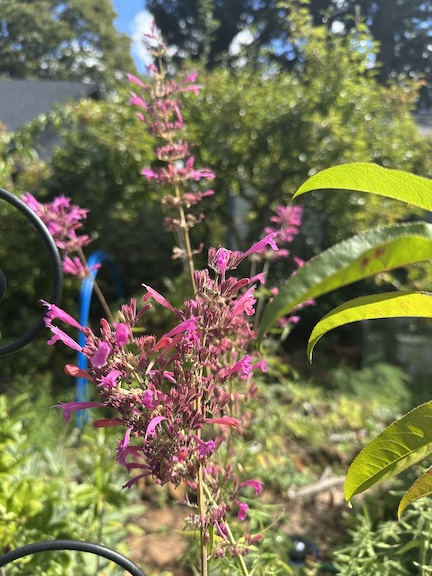
Agastache — Hummingbird Mint — is sometimes called “Anise Hyssop,” though it is neither anise nor true hyssop. Nor is it exactly a mint, though it is in the same family. Common names are confusing, indeed! This plant, native to the American far west, attracts hummingbirds to the tubular, nectar-rich flowers. This particular variety, Agastache mexicana, has the aroma and flavor of anise and is used in Mexican cooking. Reaching up to 2 meters tall, it’s a striking addition in the fall garden.
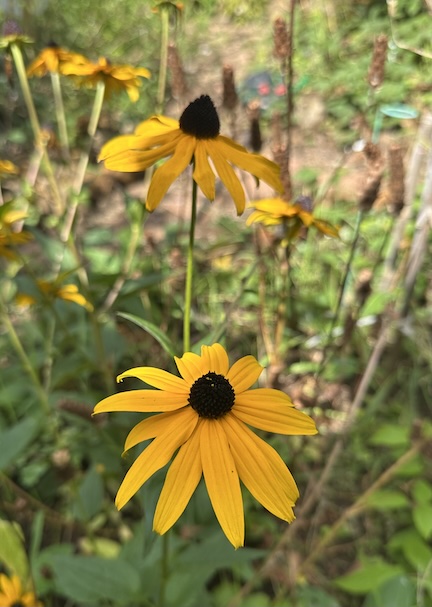
Rudbeckia bears the charming common name of Black-eyed Susan. It’s a hardy, almost indestructible plant that tolerates mild drought. It spreads, but is easily controlled. A native to the American prairies, it’s also a valuable pollinator plant in the garden. An old nickname for the plant is “Devil’s Flight” — the cheery color and the prominent “eye” warded off evil.
Cone tone lone flown otter madness.
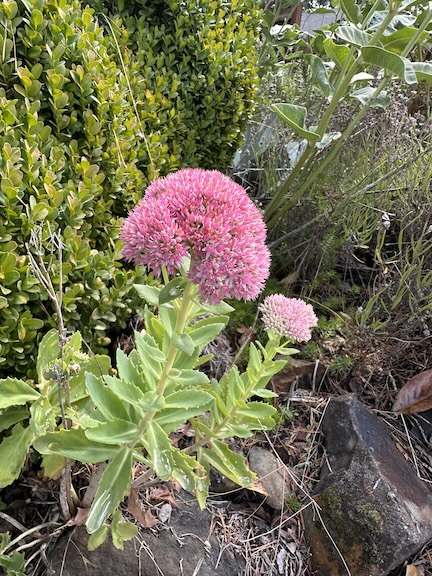
The common Sedum “Autumn Joy” is practically a requirement for sunny, dry corners of the garden. Never be afraid of planting things that “everyone” grows; if “everyone” grows the plant, it must be happy in your area. The butterflies will appreciate this pretty autumn flower.
Birch bark flags over glass drawers.
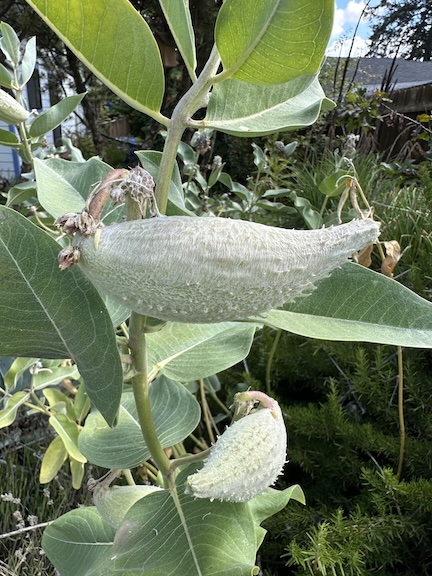
And speaking of things the butterflies will appreciate, the milkweeds finished flowering and have produced their delightful pods. Once they dry and split open, their seeds may be carried on tufts of fluff. We intend to cut the plants this year to attempt extracting the fibers from the stems, which can be processed for spinning much like extracting linen fibers from flax.
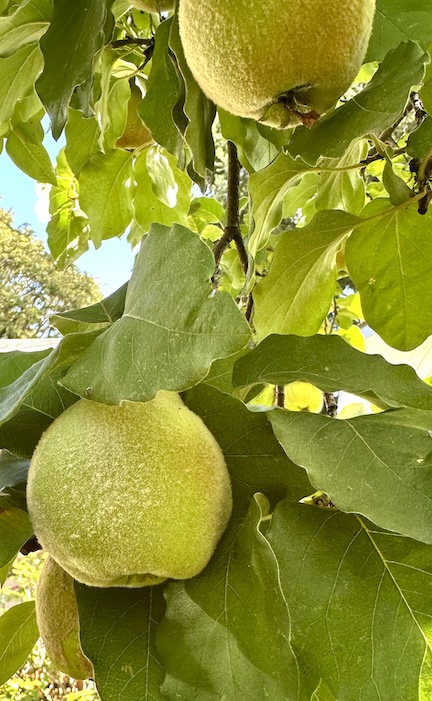
Some years ago, our pear tree put up shoots from the base that bore a different flower from the pear blossoms. It turned out to be quince. The semi-dwarf pear had been grafted onto dwarfing quince stock. We harvested nearly a grocery bag full this year, most of which we gave to a friend who grew up making pies and jam from quince, while we kept some by to attempt making quince “cheese.” It is handy to have for dedicated couples: quince was once thought to ensure fidelity.
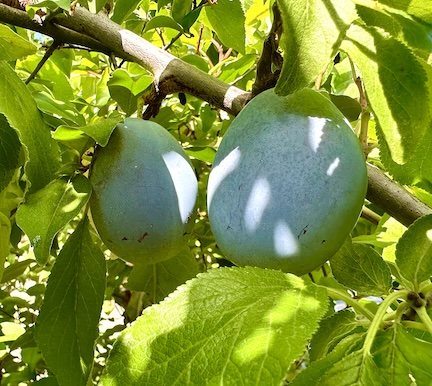
We had to cut back the Brooks Prune tree (a “prune” is a freestone plum, whether fresh or dried), and harvested two boxes of fruit. We gave away quantities, made a large batch of plum butter, and put many in the fruit dryer. These are some of the last, ripe and ready for harvest.
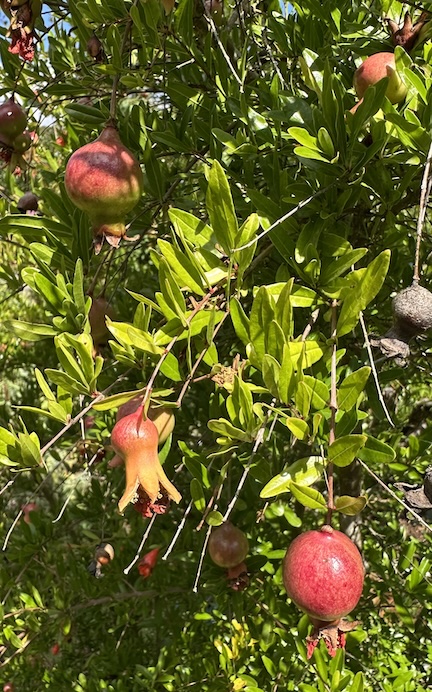
The hardy pomegranate is covered in bright orange-red fruit. Despite the heat of summer, our hot growing season isn’t long enough for these to ripen. Pomegranates have a long, rich history of folklore and magic associated with them. Their association with luck and prosperity makes these little red fruits ideal for Yule decoration.
Under forty shingles, a tennis ball gallops into gutter mud.
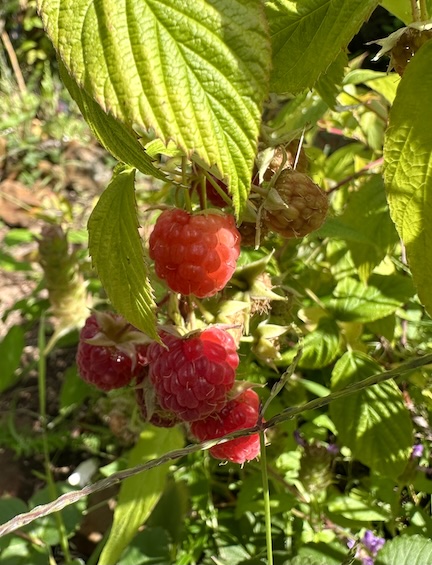
We found a handful of fall raspberries still on the canes, an unexpected treat. On second thought, perhaps we should have planted some of the seeds instead of eating all the fruit. Fall-bearing raspberries extend the harvest of the delicate fruit, and there is nothing to match the flavor of raspberries fresh from the garden.
And oh, these grapes! The vine is young and still small, but it bore several clusters of small, seedless green grapes packed with rich, tangy flavor. This is Interlaken, a wine grape that makes an excellent table grape. The ubiquitous Thompson Seedless in the grocery store is but a faint imitation of the complex flavor of wine grapes. If you have a sunny corner where you could grow a grapevine, we highly recommend this one.
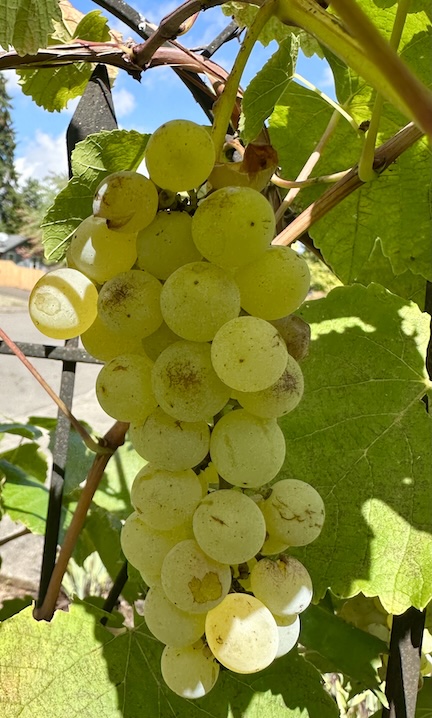
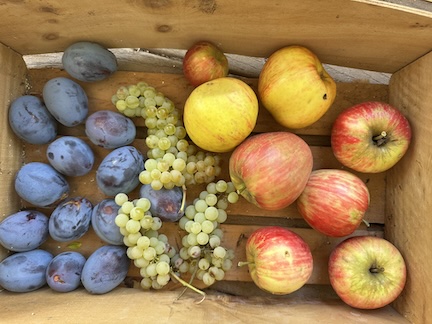
Besides the quince, we took in the very last of the Brooks Prunes, the last of the apples — all Honeycrisp this year, the Gravensteins didn’t set fruit — and the delicious grapes.
Do not go gently into the bowling alley at ten o’clock sharp, rage, rage against the brass door knocker of fate.


You must be logged in to post a comment.