
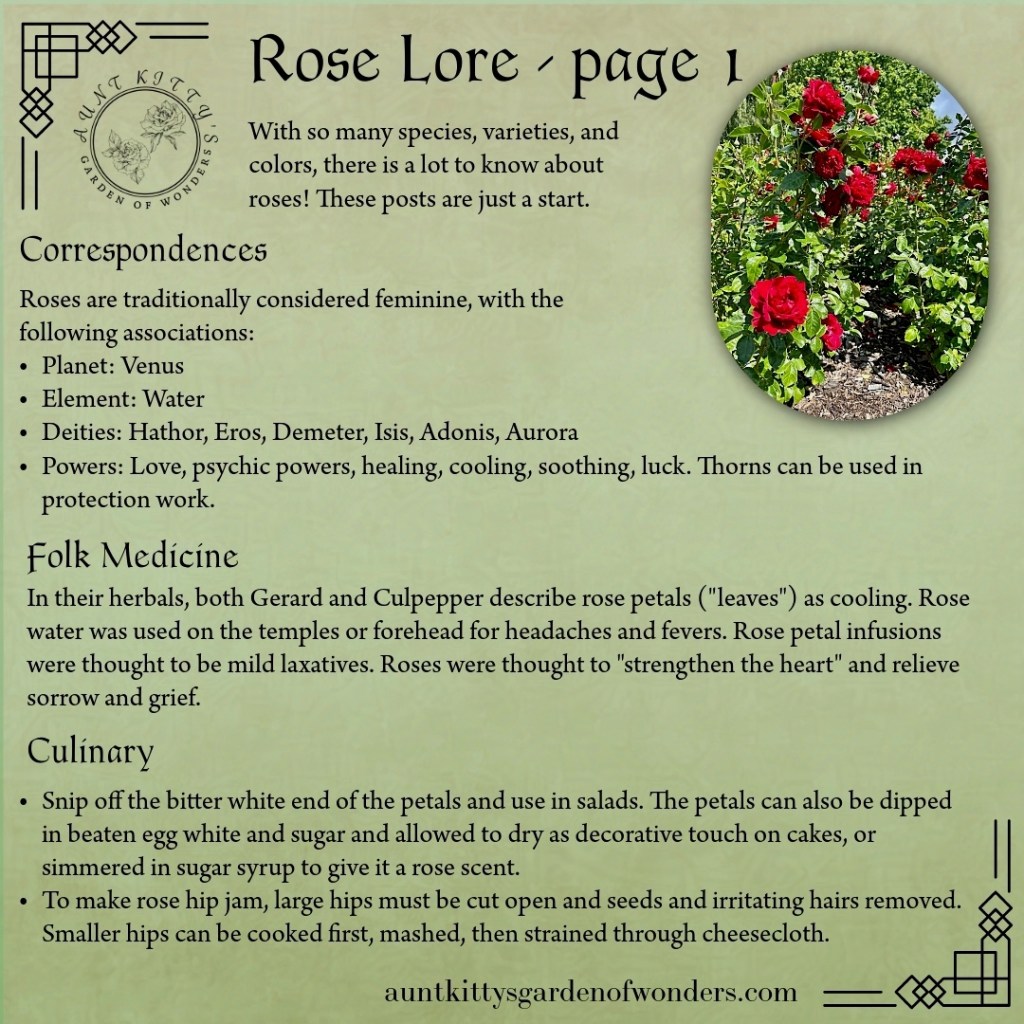
The roses are in bloom in our garden and at our local public gardens. Roses have been admired and cultivated far back in ancient history. The original cultivated roses, like the wild roses they derived from, bloomed just once in midsummer, one glorious show of color, and one chance to gather rose petals for many uses. From the flower grows the fruit, the rose hips, that are lovely fall color and have many uses also.
Roses appear in many Medieval artworks, and were widely used in the kitchen and in medicines. Herbalists listed rose petals, hips, and infusions as treatment for nearly everything, in hopes that something so lovely must have many virtues. Rose types known in Medieval Europe included Gallica roses (also known as the Provence or Apothecary’s rose), the Damask rose, known for its spicy fragrance, Alba rose, the symbol adopted by the House of York, and Rosa Mundi, a sweetly-scented rose with dense thorns that can grow as a nearly impenetrable hedge.
“Old Garden roses” are those that were cultivated up through the 1860s, when the first hybridized roses were developed. These include the Medieval roses, as well as the original Tea Roses, Centifolia roses, China roses, Noisette roses, and Moss Roses.
From those roses, through selection and hybridization, come the many modern roses: Hybrid Tea roses, Floribundas, Grandifloras, shrub roses, miniature roses, climbing roses, rambler roses, Polyantha roses, David Austen roses, and more.
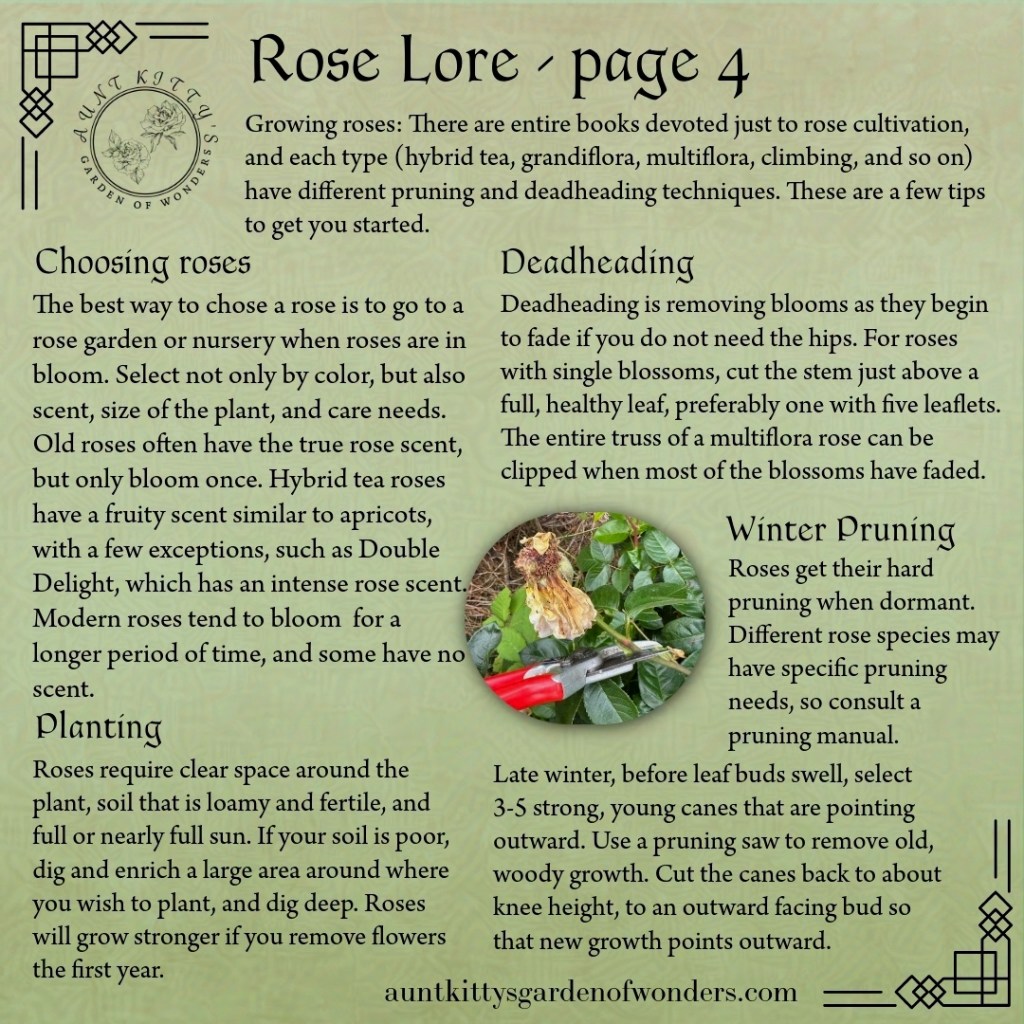
When choosing roses for the garden, consider not only color, but also scent, size, and growth habit. A vigorous climber will quickly outgrow a small garden, while miniature roses may look puny in a large garden, even when massed together. If possible, visit a rose garden or nursery to see and sniff many different roses. Once selected, be sure to consult rose manuals to find specific information on cultivation, including winter pruning, of your chosen rose type.
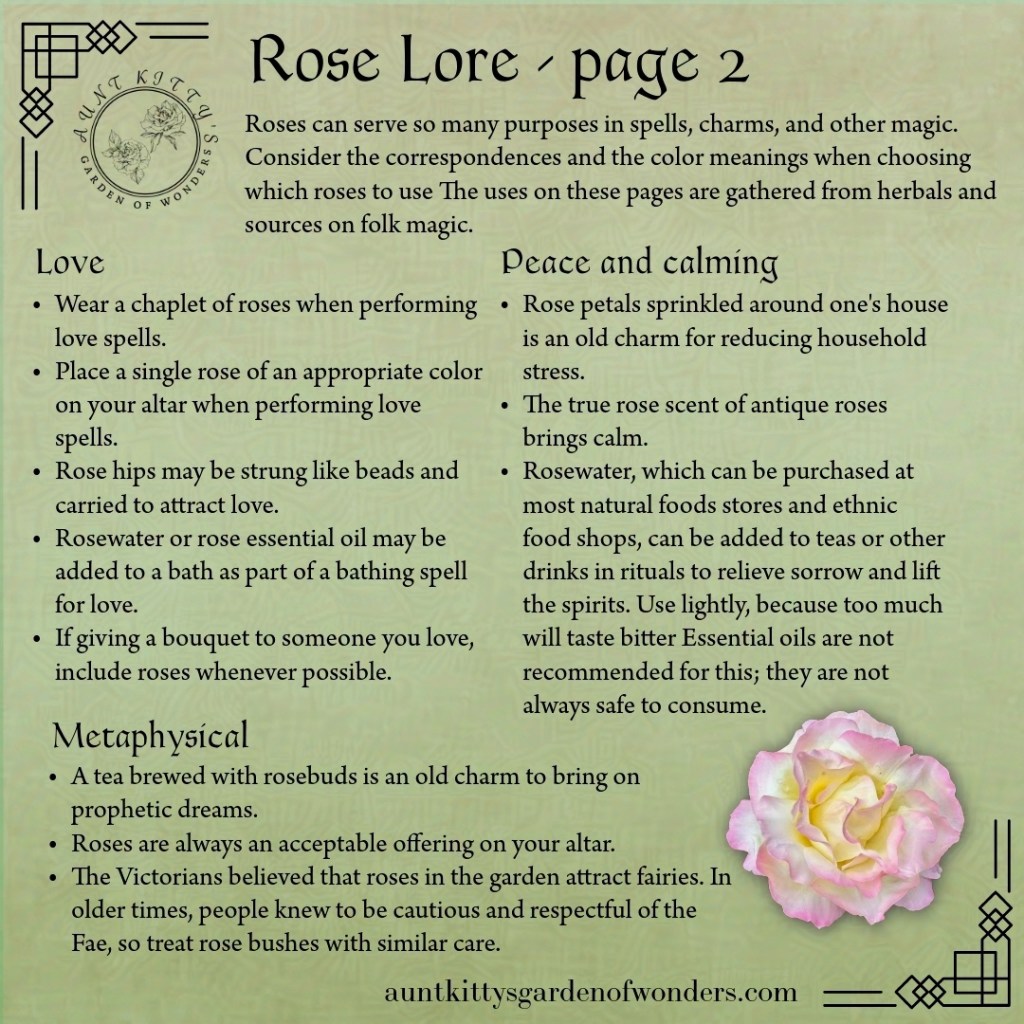
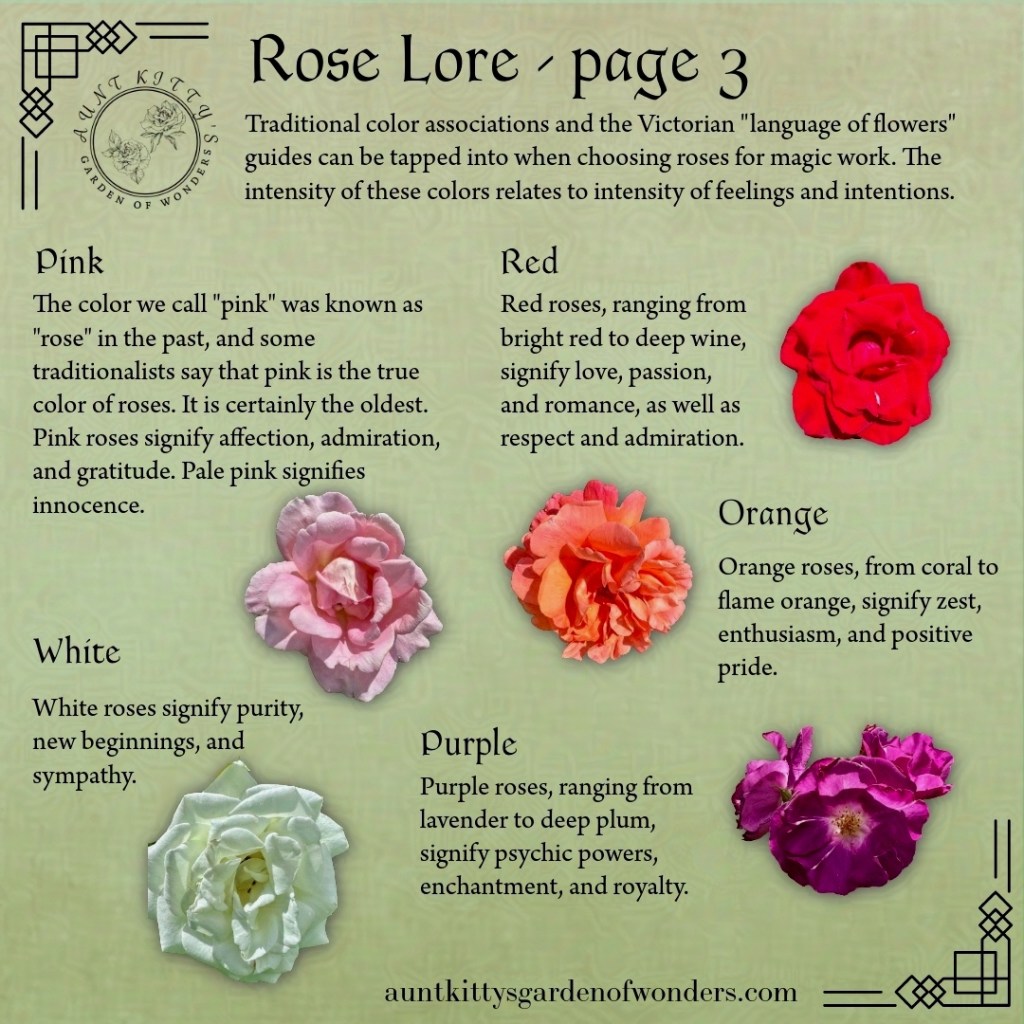
Now for some interesting and useful rose lore.
 Aunt Kitty's Garden of wonders
You must be logged in to post a comment.